
Arrest History in Summit County
The agency with jurisdiction creates the arrest report. The Summit County Sheriff covers unincorporated areas and operates the detention function. Breckenridge, Frisco, Silverthorne, and Dillon police keep reports for incidents within their jurisdictions. Colorado State Patrol handles highway matters, including I-70 and portions of Highway 9 described in local guidance.
Summit Detentions creates the booking and custody slice after a person arrives. The court later creates advisement, bond, complaint, and disposition records. Fingerprints and later outcomes can reach the Colorado Bureau of Investigation. A report, booking, docket, and CBI history are not copies of the same document.
Four Summit Arrest Records Compared
Ask what fact is needed before choosing an office. The arrest narrative addresses probable cause and the incident. The booking entry addresses intake and custody. The court file addresses filed charges and outcomes. CBI provides a statewide history tied to submitted identity data.
| Record | Custodian | Best use |
|---|---|---|
| Arrest report | Arresting agency | Narrative, location, case number |
| Booking record | Summit Detentions | Intake, bond, release |
| Criminal case | Court clerk | Filed counts and disposition |
| Colorado history | CBI | Statewide entries |
How to Look Up Summit County Arrests
No verified official daily booking blotter was located. Use the full fallback chain. Start with geography, then call Summit Detentions at 970-453-2232 to confirm custody. A docket may lag a release, and a booking allegation may differ from the count later filed.
- Identify where the event occurred and which agency made the arrest.
- Call Summit Detentions to confirm custody and the correct booking identity.
- Search Summit Combined Courts or the proper municipal court for filed charges.
- Request the narrative from the arresting agency with date, location, and incident number.
- Use CBI ICHC for a Colorado name-based history and CBI's challenge route for errors.
Summit County Sheriff
Records and Detentions routing
970-453-2232
Confirm counter address and hours before travel.
Summit Arrest Agency Boundaries
Silverthorne's jurisdiction guidance gives a useful map. Incidents in town go to Silverthorne Police. I-70 and Highway 9 north of town go to Colorado State Patrol. Wildernest, Mesa Cortina, Ruby Ranch, Ptarmigan, Hamilton Creek, and Dillon Valley go to the Sheriff. The jail holds only the booking slice.
Frisco's Police Records Request Form asks for contact details, a record description, person, date, time, location, signature, and CCJRA affirmation. Frisco separates this from its general CORA form. Breckenridge and Silverthorne records likewise go to their police custodians.
For a Sheriff-authored report, ask for Records and describe the exact item: incident or arrest report, booking history, dispatch material, 911 audio, body-worn camera footage, or another existing record. Supply the incident number if known, plus a narrow date and time range, location, involved party, and desired format. Call first when the correct division is unclear. Records, Detentions, and Dispatch maintain different parts of an event. For a Colorado State Patrol arrest, use the official CSP report channel rather than assuming the county owns the trooper narrative. Other state or federal agencies likewise retain what they created, even when Summit County jail temporarily held the person.
What a Summit County Arrest Record Shows
Available fields depend on the custodian and CCJRA review. A precise request can name the agency case number, incident date, booking number, and desired medium. Medical, mental-health, victim, juvenile, protected-person, and active-investigation details should not be expected publicly.
| Booking Number | Jail intake identifier for a custody event. |
|---|---|
| Booking Date & Time | When detention staff recorded intake. |
| Arresting Agency | The office that authored the report. |
| Charges | Booking allegations, which may later change. |
| Bond | Court-set amount and type when releasable. |
| Mugshot Policy | No blanket Summit release rule was verified; CCJRA and local policy control. |
| Release Status | Release, transfer, or custody information when releasable. |
Summit Fingerprints Reach CBI
After a qualifying booking, fingerprints support identity-based reporting to CBI systems. The later disposition should connect to that event, but a missing outcome can leave an entry marked disposition unknown. The CBI criminal-history FAQ explains repository and challenge routes.
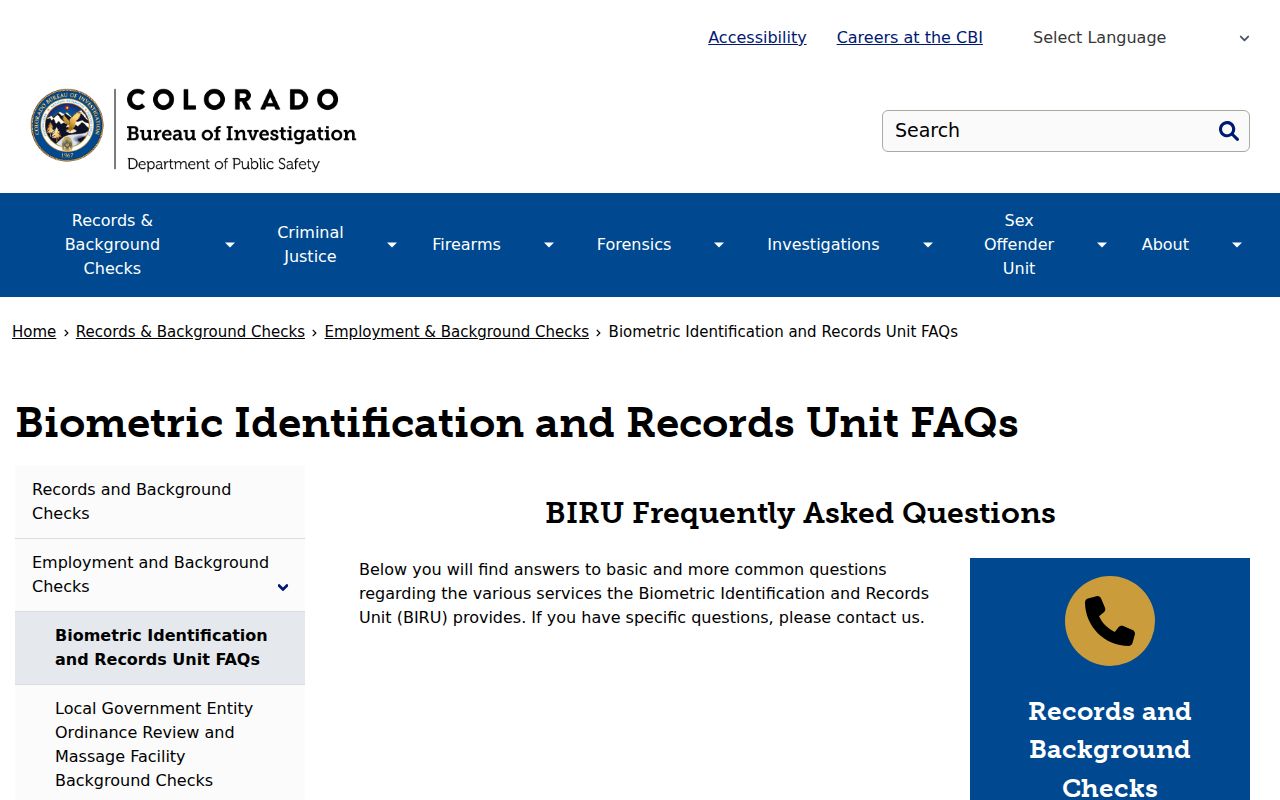
The state source does not replace a local report. CBI directs arrest-report requests to the agency that created the narrative.
Inside a Summit County Booking
Detention staff first confirm the legal authority for custody and inventory property. They record identity, take fingerprints and a booking photo, enter presented charges and holds, and conduct medical and mental-health screening. Classification then determines housing. Those screening and security details are not ordinary public arrest-record fields. The public-facing booking slice is narrower and may include identity, intake time, arresting agency, charges, bond, court reference, and release information.
An advisement or bond process follows. Release can occur by court order, bond, sentence completion, transfer, or another lawful basis. Personal recognizance, cash, property, or surety bond may be used when ordered. Before sending funds, confirm the exact person, booking identity, amount, bond type, case, and accepted payment method with the jail or court. A third-party listing is not a safe basis for payment.
The jail houses people awaiting local proceedings, serving qualifying local sentences, or held for another authority. It is not the state prison system. After a state sentence and transfer, use Colorado Department of Corrections Offender Search. For federal custody, use the Federal Bureau of Prisons locator. VINELink may supplement custody notifications where enrolled, but it does not replace confirmation with the holding agency.
Recent Summit Arrests and Booking Logs
Research did not verify a stable public daily booking log, jail roster interface, or official mobile app with an app-only arrest tool. Do not substitute an unofficial mugshot gallery. The dependable route is the official detention division and phone line, followed by the court and originating agency.
Police or county press releases may describe selected arrests, but they are not a complete log. An absent release proves nothing. Even a roster describes custody at one point, not a complete Summit County arrest history or final outcome.
Fixing Unknown Summit Dispositions
When CBI shows an arrest without its outcome, obtain a certified disposition from the correct court and follow the CBI disposition correction process. This is correction, not automatically sealing.
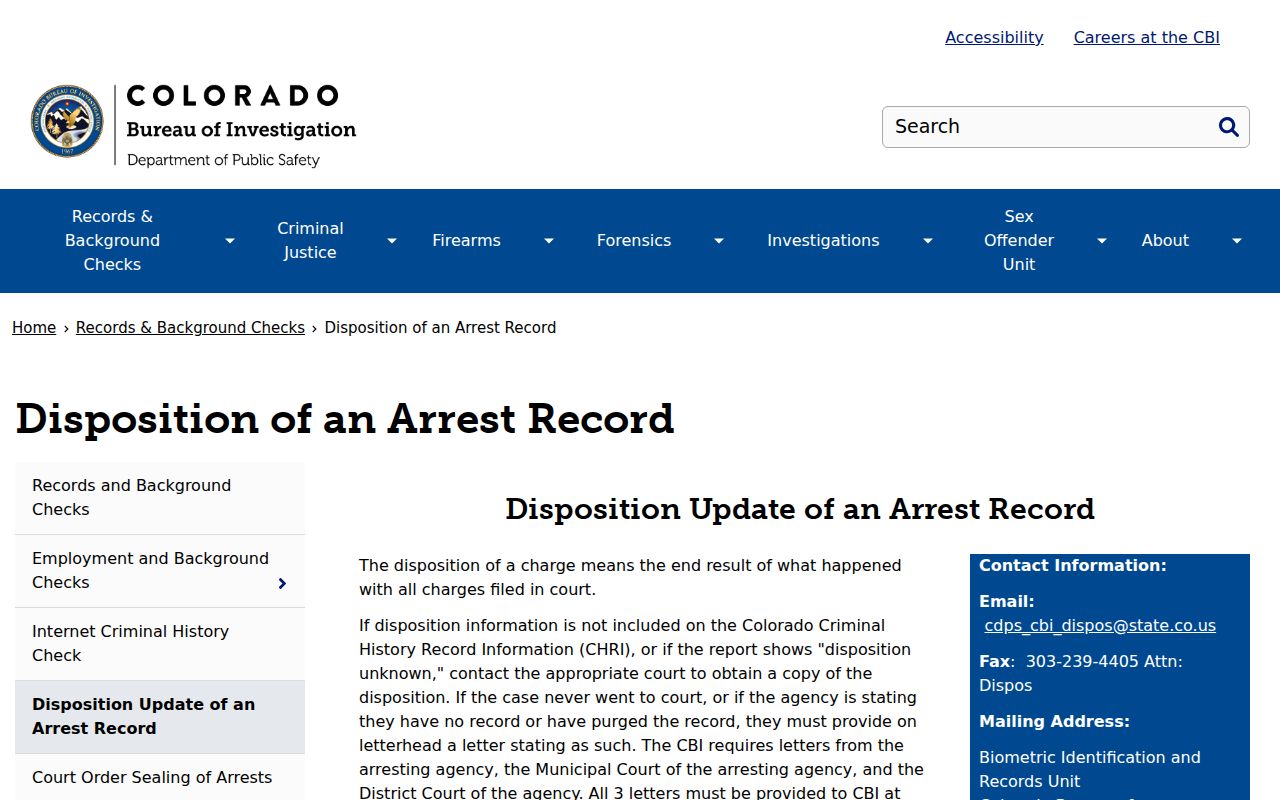
If no office can locate the case, CBI may require letters from the arresting agency, municipal court, and district court. That three-letter route documents the search.
CCJRA Requests for Summit Arrests
The Colorado Criminal Justice Records Act governs requests to police, the Sheriff, and CBI. Official-action records receive stronger access treatment than investigative narratives. A custodian can weigh privacy, safety, fair-trial, and investigative interests and redact protected data.
The CBI CCJRA request page illustrates the state route and its own copying rule.
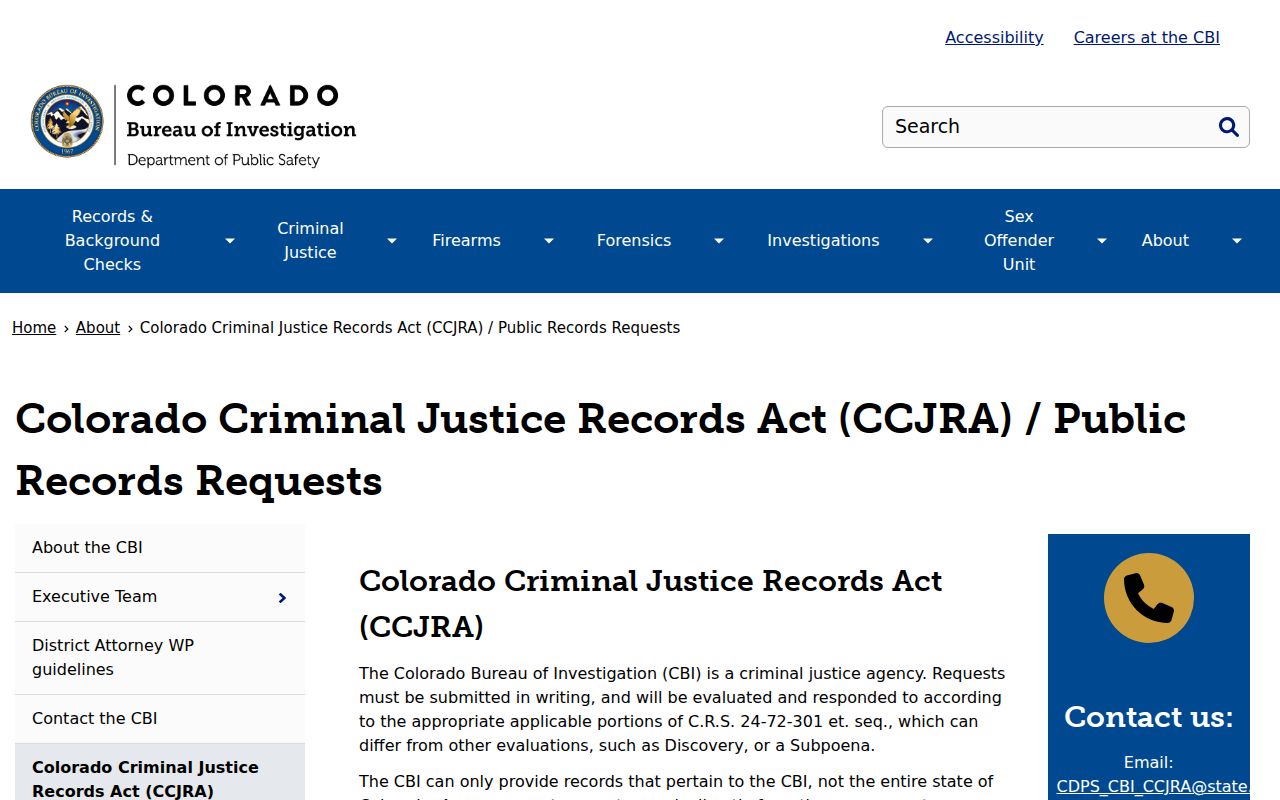
CBI's $0.25 copying figure does not set Sheriff or town police fees. Ask the actual custodian for an estimate before broad media requests.
Sealing a Summit Arrest Trail
A dismissed, acquitted, or non-filed arrest may qualify for Colorado record sealing, depending on current law and the facts. Other outcomes have different limits. Sealing differs from correcting a wrong disposition. Use Judicial Branch sealing forms and file where the forms direct.
CBI's sealing guidance explains the repository's role.
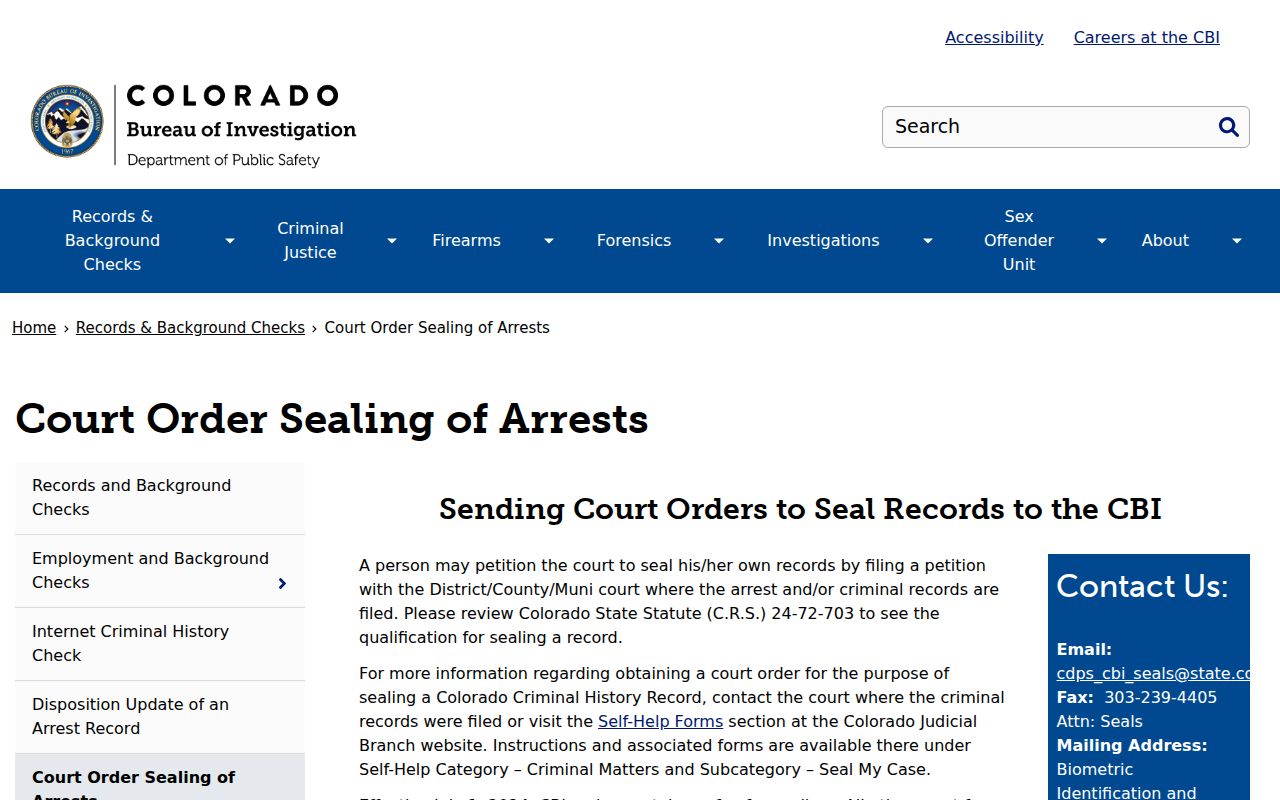
Sealed does not mean deleted from every justice system. Keep certified copies and recheck public displays after processing.
Summit Arrests vs Convictions
An arrest records a law-enforcement action and allegation. A conviction requires a court finding or plea. Prosecutors may decline, amend, or dismiss charges, and a person may be acquitted. Compare the entry with the disposition. Also compare dates and case numbers instead of relying on a shared name. The court register may show separate outcomes for several counts, while the jail record preserves only what was presented at intake. If the court has no matching filing, ask the prosecutor or arresting agency whether the event was declined, routed elsewhere, or recorded under a different reference.
| Arrest Record | Conviction Record |
|---|---|
| Created by police and jail | Created by the court |
| Shows an arrest or booking occurred | Shows guilt was adjudicated |
| Held by agency and detention system | Held by clerk and reported to CBI |
| May lead to release, no filing, or dismissal | May lead to sentence, appeal, or sealing |
Note: An arrest is not proof of guilt, and the booking charge may not match the final filed count.