
How to Check Summit County Criminal History
No single search produces a complete Summit County criminal history. Start with the Colorado Judicial Branch docket search for a state case filed in Summit County. District Court handles felonies, while County Court handles state misdemeanors, traffic cases, and early felony proceedings. Municipal cases remain separate. Breckenridge, Frisco, and the combined Silverthorne, Dillon, and Keystone court each retain their own town matters.
Gather a full legal name, date of birth, spelling variants, likely arrest date, and the agency or town involved. A court case number is not the same as a police report number or municipal citation number. After locating a possible court event, confirm the identity and request the register of actions or disposition from the clerk. For a recent arrest, contact Summit County Detentions and the arresting agency before expecting a statewide history to be complete.
- Search the Summit County state-court docket and note the court, case number, hearing date, and division.
- Check the correct municipal court when the event involved a town ordinance, local traffic ticket, or minor municipal charge.
- Ask Summit County Detentions about current custody, then request the report from the sheriff or town police department that made the arrest.
- Run the Colorado Bureau of Investigation ICHC search for a releasable Colorado name-based history.
- Order court copies or use an approved fingerprint channel when identity assurance or an official record is required.
Five Summit County Record Sources
A Summit County criminal record can live with five distinct custodians. The arresting police agency keeps the incident narrative. Summit County Detentions keeps booking and release facts. A municipal or state court keeps filed charges, hearings, and dispositions. CBI compiles reported Colorado arrest and disposition cycles. CDOC keeps records for state prison custody and supervision. Each source is official within its own role, yet none replaces the others.
The Summit County government site is a practical route into local departments and current contact pages.
The county source helps confirm which local office currently accepts a request, but court and state records still require their own channels.
Record flow: Police or Sheriff › Detentions › Prosecutor and Court › CBI, with CDOC added after a state custody sentence.
Official Summit County Background Checks
The Colorado Bureau of Investigation is the state criminal-history repository. Its Internet Criminal History Check, or ICHC, searches releasable Colorado history by name and other identifiers. It is quick, but it does not confirm identity through fingerprints. Juvenile arrests, sealed cases, and some other excluded events do not appear. A no-record response only means the submitted criteria returned no releasable match.
CBI also supports fingerprint-based processes through approved electronic vendors. Use the service code and purpose required by the requesting authority. Frisco Police does not provide fingerprints and directs people to IdentoGO. Vendor availability and charges can change, so select a current appointment through the official location tool. A person seeking a national self-review can use the FBI Identity History Summary process instead of treating a Colorado name search as nationwide.
| Record channel | Fee guidance |
|---|---|
| CBI ICHC | Verify the live transaction fee in the official portal |
| Electronic fingerprints | Vendor capture and agency charges vary by service code |
| FBI Identity History Summary | Verify the current fee in the FBI EDO system |
| Summit police or Sheriff report | Ask the custodian for an estimate based on format, review, and redaction |
| CBI CCJRA paper copies | CBI lists $0.25 per copied page for its own requests, not as a countywide rate |
The CBI records overview separates these official options.
That distinction matters when a common name may produce a false match or when the search purpose requires verified identity.
Search Summit County ICHC Records Carefully
ICHC depends on the details entered. Exact names and birth dates reduce ambiguity, though a name search never becomes biometric proof. Middle name, sex, and race may narrow a match when those details are known accurately. Review each returned cycle for the agency, arrest date, charges, and reported disposition rather than assuming the first similar name is the correct person.
The official CBI ICHC portal shows the live search workflow.
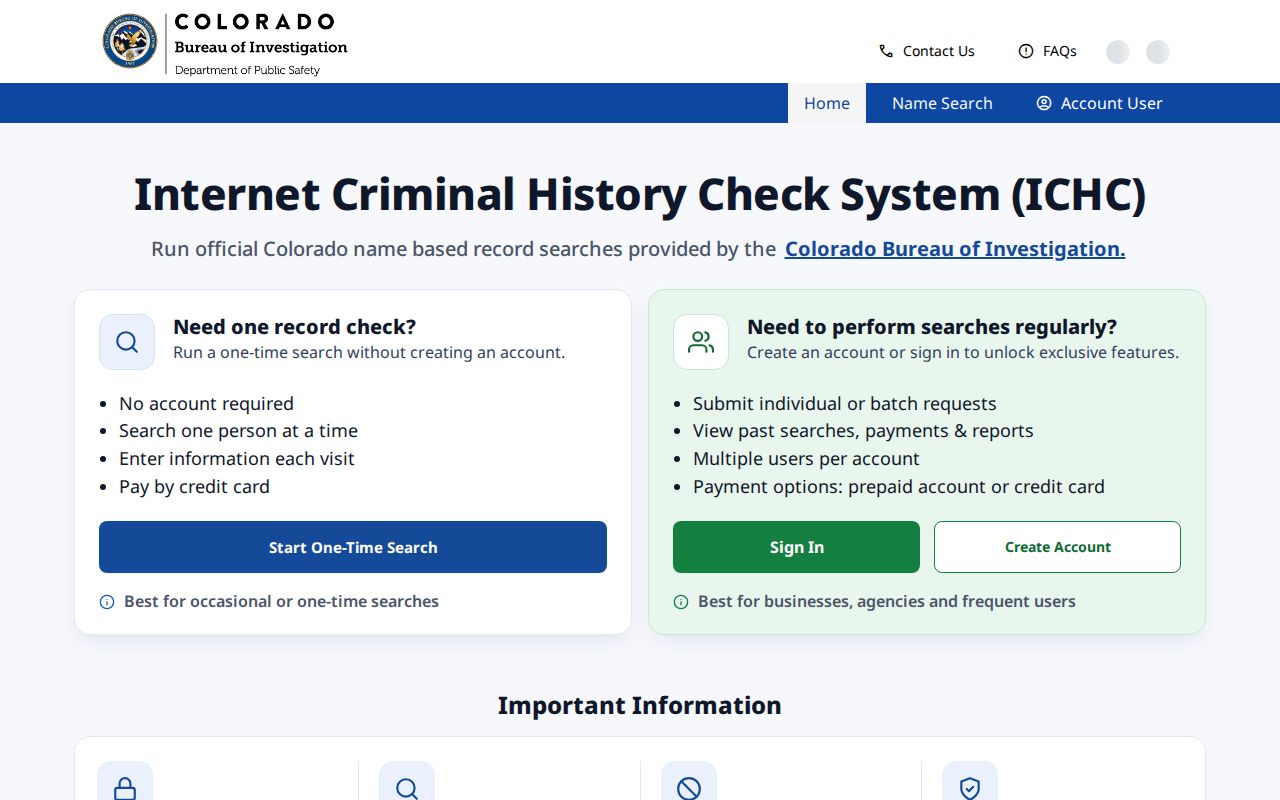
The form is a statewide Colorado search, not a substitute for Summit County police reports or court copies.
| Field | Use | Search note |
|---|---|---|
| Last and first name | Required | Use legal and known spellings |
| Middle name | Optional | Helps separate common names |
| Date of birth | Strong identifier | Use the exact date when known |
| Sex or race | Portal-dependent | Enter only accurate information |
Types of Summit County Criminal Records
Record type determines the custodian. An incident report contains an officer's narrative, statements, and evidence descriptions. An arrest report documents the grounds and act of arrest. Booking data tracks intake, bond, custody, and release. The prosecutor's charging document may revise or omit the allegations first presented at booking. The court file then records formal events and the result of each filed count.
A CBI history organizes reported arrest and disposition cycles. It is not the police narrative. Warrant, probation, parole, prison, and registry records also come from different authorities. The Summit County Sheriff executes warrants and runs local detention; Colorado Judicial Branch Probation supervises probation; CDOC holds state prison and parole information; CBI manages the statewide registry database.
- Arrest and booking records: agency and jail facts about an arrest and custody, not proof of guilt.
- Criminal court files: filed counts, hearings, orders, outcomes, and sentencing entries.
- CBI history: Colorado cycles reported to the central repository and matched by submitted identifiers.
- Warrants: court-issued commands that law enforcement may execute, with disclosure limits for active matters.
- Supervision and registry records: information held by probation, CDOC, parole authorities, local registration agencies, and CBI.
Summit County Custody Record Locators
Custody location changes the lookup. Summit County Detentions covers local pretrial custody and shorter local commitments. CDOC Offender Search covers people within Colorado state correctional custody or supervision. The Federal Bureau of Prisons locator is a third system for federal custody. An empty result in one does not rule out placement in another.
The Summit County Sheriff publishes the current route to detention services.
When no public booking blotter is exposed, call Detentions, search the court docket, and request the arresting agency's report.
For a state sentence, use the CDOC Offender Search.
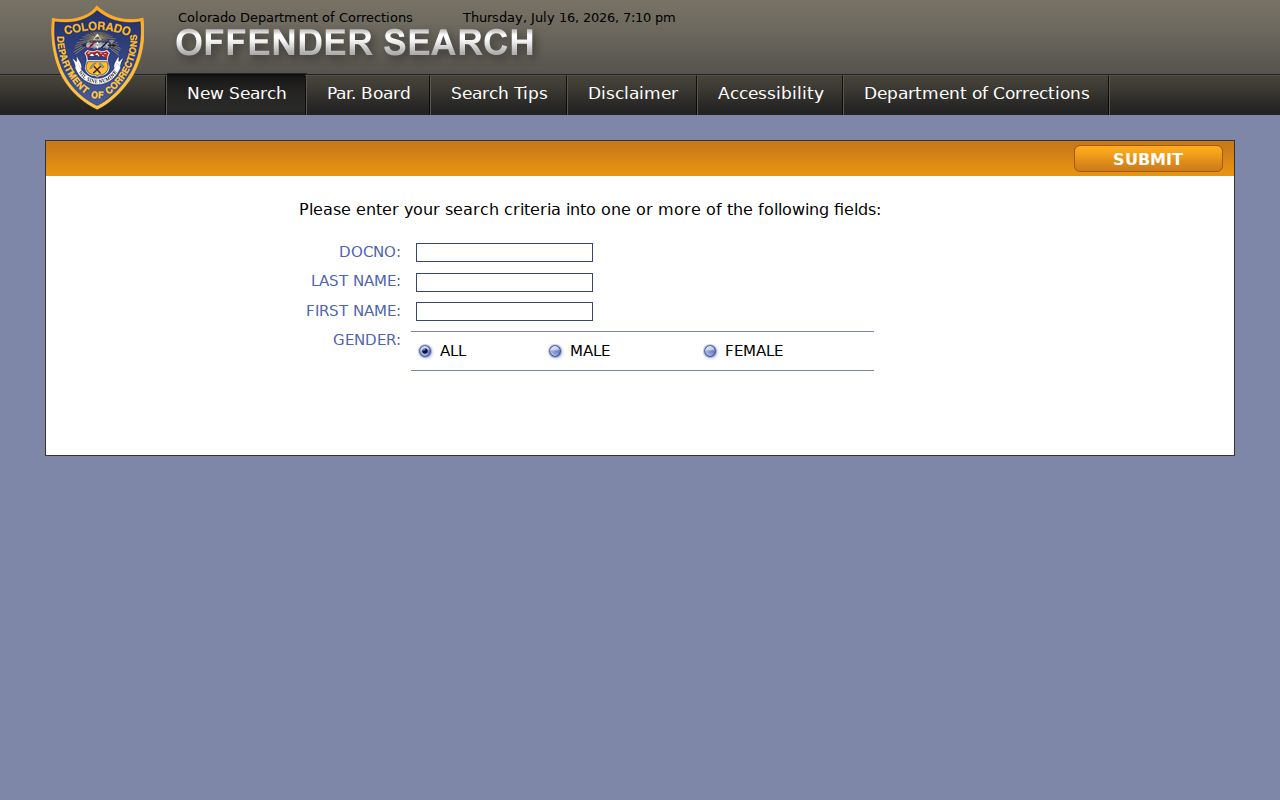
A CDOC sentence entry in a rap sheet is a custody event, not a new Summit County arrest.
What a Summit County Criminal Record Shows
A Colorado rap sheet starts with reported identity details, aliases, birth information, descriptive fields, a state identification number, and fingerprint linkage where available. Arrest cycles may list the date, contributing agency, tracking identifiers, arrest allegations, and the disposition reported by a court. A court record uses a different frame: case number, filed counts, judge, counsel, bond, events, outcome, sentence, and financial entries. Summit booking information focuses on intake and release, presented charges, booking number, bond, and custody status.
| Name & Identifiers | Reported name, aliases, birth data, descriptors, and record identifiers |
|---|---|
| Arrest / Booking Data | Date, agency, booking number, presented allegations, bond, and release status |
| Charges & Statutes | Each arrest allegation or court-filed count and its Colorado citation |
| Disposition | Outcome per count, such as conviction, dismissal, acquittal, or deferred status |
| Sentence | Custody, probation, fines, costs, or restitution when public |
| Custody / Supervision Status | Local jail, CDOC custody, probation, parole, or release entries |
Summit County Arrest Records Versus Charges
An arrest allegation reflects what officers presented at booking. The Fifth Judicial District Attorney decides what state charges to file, and a municipal prosecutor handles qualifying town matters. Counts can change after evidence review. That is why a Summit County booking line should be paired with the later court register and disposition.
The Colorado State Public Defender is part of the local state-court process for eligible defendants.
The presence of counsel, a plea setting, or a dismissal in the docket adds context that an arrest-only entry cannot supply.
- Arrest
- Restraint under a warrant or lawful probable cause, not a conviction.
- Count
- One separately alleged offense in a filed case.
- Disposition
- The result of a charge.
- Deferred judgment
- A plea with judgment delayed while court-ordered terms are completed.
Public Access to Summit County Records
Colorado treats criminal-justice records under the Colorado Criminal Justice Records Act, or CCJRA. Records of official action, such as an arrest, filed charge, and disposition, receive different treatment from investigative narratives. A custodian may weigh privacy, safety, an active investigation, and other statutory limits before releasing a report. Request the specific record from the agency that created it and expect protected personal, victim, juvenile, medical, and investigative details to be removed when required.
Key Statutes:
C.R.S. §§ 24-72-301–309 - CCJRA governs access to criminal-justice records and custodian review.
C.R.S. § 24-72-302 - Defines criminal-justice records and records of official action.
C.R.S. § 24-72-305 - Sets inspection rules, limits, and discretionary factors.
C.R.S. §§ 24-72-701 et seq. - Controls criminal-record sealing.
C.R.S. §§ 16-22-101–115 - Controls sex-offender registration and public dissemination.
The official Colorado Revised Statutes gateway is the source for current statutory text.
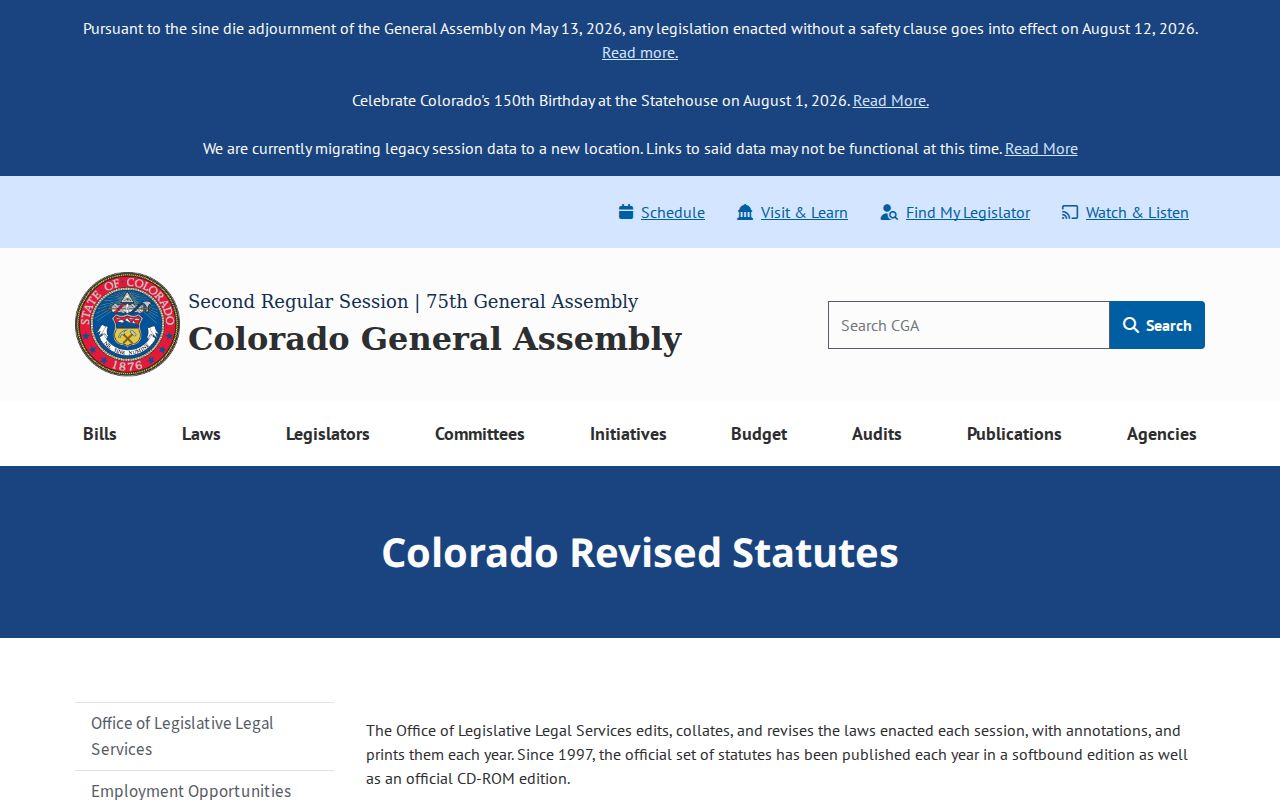
Statutory access does not mean every police narrative or protected field must be posted online.
Fix Summit County Record Dispositions
A missing court outcome in CBI is a correction issue, not automatically a sealing issue. Obtain a certified or official disposition from the correct Summit County or municipal court and follow CBI's disposition-update process. When no agency can locate the case, CBI may require three letters: one from the arresting agency, one from the municipal court, and one from District Court. That unusual three-source path helps prove that the missing record cannot be resolved through an ordinary court copy.
Start by matching the arrest date, agency, and tracking information on the CBI history. Ask each office to use the same identifiers. Keep copies of every response and recheck the state history after CBI processes the submission.
Note: Correcting an incomplete outcome does not erase a valid arrest or conviction.
Sealed Summit County Criminal Records
Colorado generally uses record sealing for eligible adult matters and expungement for eligible juvenile records. The path depends on whether a Summit County arrest was never filed, dismissed, acquitted, resolved through a deferred judgment, or ended in conviction. Offense category, later criminal history, waiting periods, exclusions, and notice rights may affect eligibility. Use current Colorado Judicial Branch self-help forms rather than assuming one petition fits every outcome.
After an order, confirm that the court distributed it to CBI and every named custodian. Then recheck the public court search and CBI history. Sealing limits public visibility, but CBI explains that it retains records. Authorized criminal-justice agencies and other recipients named by law may still have access. Juvenile files, victim details, protected addresses, medical information, supervision records, and nonpublic registry data may be restricted even without an adult sealing order.
Sealed does not mean deleted. Keep certified copies of the order and verify each affected system after processing.
Plan a Summit County Records Visit
Summit County geography makes advance confirmation useful. State-court records are centered in Breckenridge, while the combined municipal court serving Silverthorne, Dillon, and Keystone sits in Silverthorne. Frisco and Breckenridge maintain separate municipal records. A ticket's court box and jurisdiction control where the file lives, not the uniform worn by the officer.
Before driving, call the clerk or records unit, confirm public hours, ask whether the file is onsite, and request a cost estimate. Bring the correct case, citation, or police report number. Winter weather, resort traffic, and parking can turn a simple counter visit into a longer trip. Electronic delivery or a mailed request may be available, but certification and redaction can add cost or time.
Criminal Records by Summit County City
Summit County's three largest incorporated towns each add a local records layer. Breckenridge Police and Municipal Court hold town reports and citations. Silverthorne hosts a combined municipal court for Silverthorne, Dillon, and Keystone, while its police jurisdiction does not extend into nearby unincorporated areas such as Wildernest or Dillon Valley. Frisco separates police and municipal-court criminal-justice requests from its general CORA form. Custodial arrests from all three towns move to Summit County detention rather than a town jail.
Breckenridge Criminal History
5,078 residents in the cited 2021 DOLA series · separate police and municipal-court channels
Silverthorne Criminal History
4,611 residents · shared court for Silverthorne, Dillon, and Keystone
Frisco Criminal History
2,859 residents · dedicated criminal-justice records request form
Read Summit County Record Context
Population and justice data need a defined source and period. Summit County includes resort towns, mountain highways, and unincorporated communities served by different agencies. Seasonal travel can raise calls and custody activity without making one monthly figure a stable annual trend. Use official Colorado crime statistics and local agency reports, and label the year or month before comparing numbers.
The Census QuickFacts profile for Summit County supplies current demographic context.
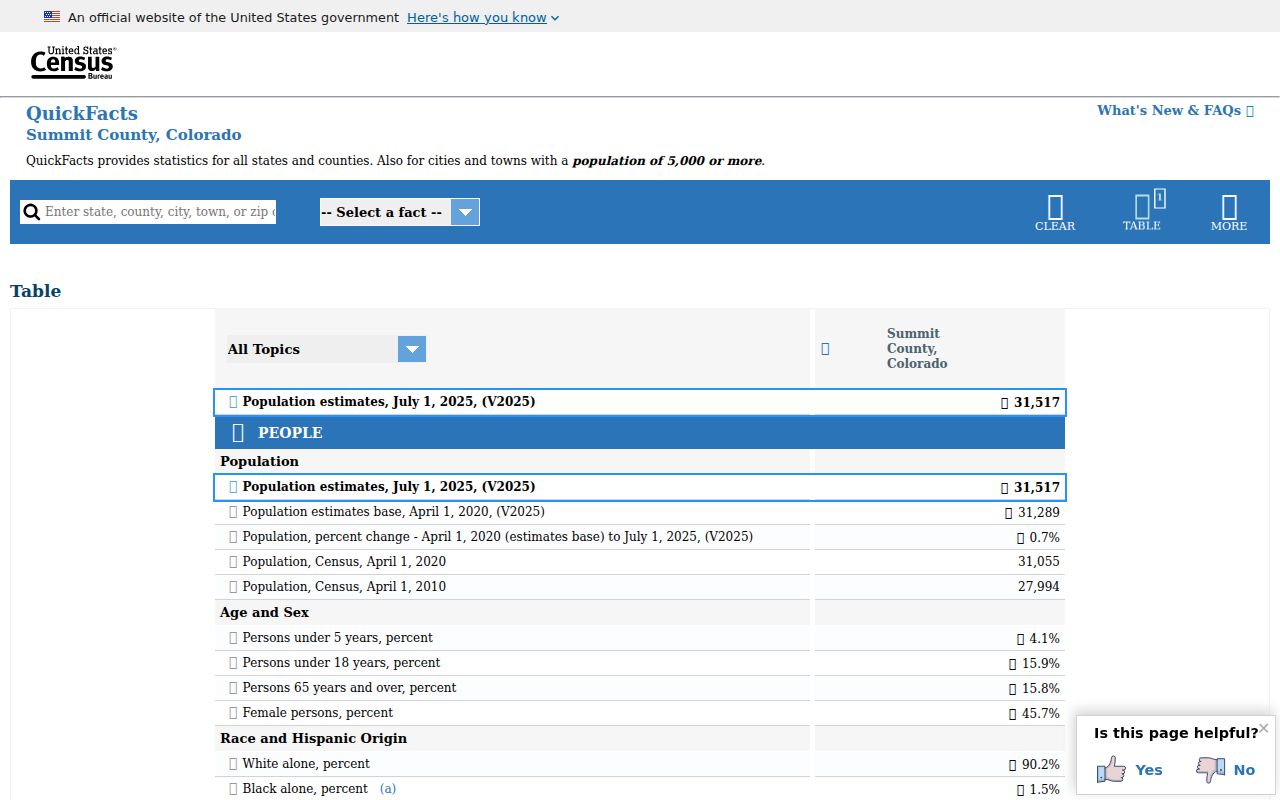
Demographic context does not establish whether a named person has a record. That question still requires an identity-aware search of the proper official source.